Why does my cat head-butt me? (Bunting explained)
By Dalia · Last reviewed 30 Sept 2026
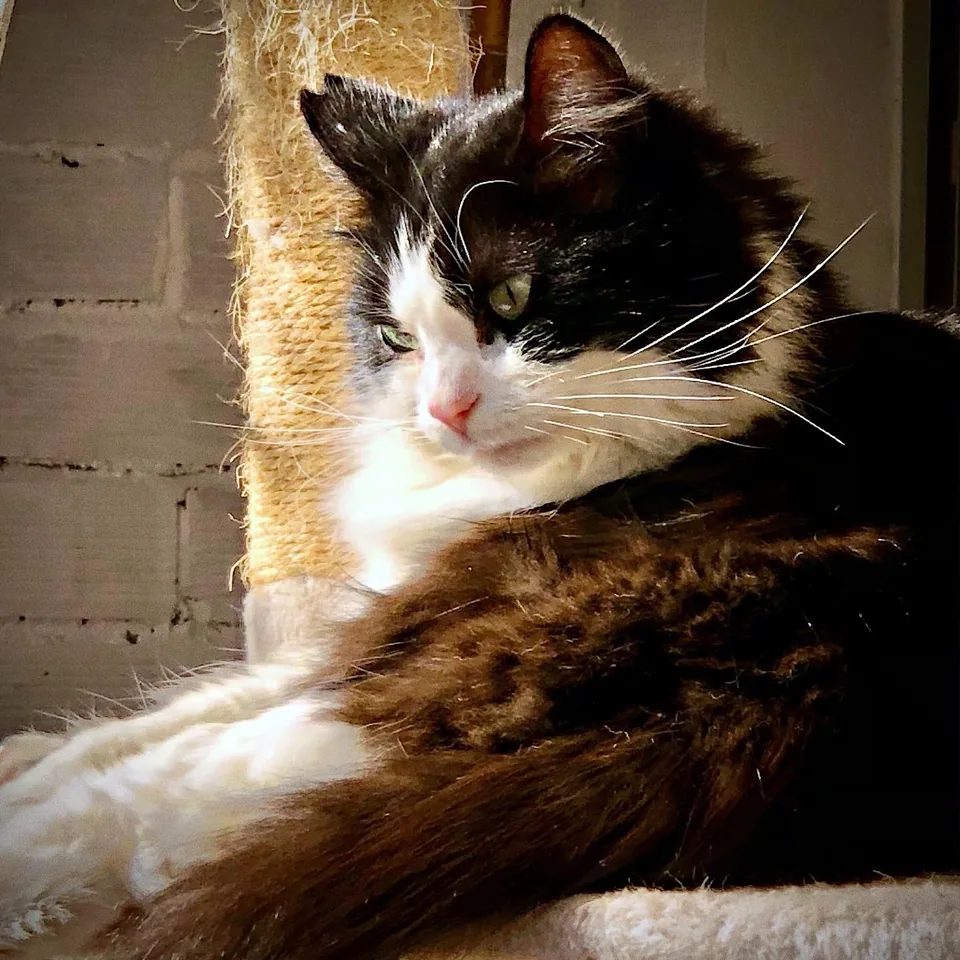
You're sitting on the sofa and your cat walks up, looks you in the eye and firmly bonks their forehead against your face. It's called bunting, and "why does my cat head-butt me?" is one of the most searched cat questions on Google.
It's about scent
Cats have scent glands on their forehead, cheeks, chin and around the lips. When they rub or bump these areas against something, they leave their own scent. Cats live in a world of smell, and a shared scent says "we belong together".
In a group of friendly cats, individuals rub against each other to create a shared "family smell". When your cat head-butts you, they're including you in that group. As a vet quoted by Parade put it, when cats rub against you they are scent marking, and "it's quite the compliment".
What bunting means
- Affection and trust. Cats only bunt people they feel safe with. Bringing their face, eyes and head close to you is an act of trust.
- Greeting. Many cats bunt when you come home, or first thing in the morning.
- Asking for attention. A head-butt is often followed by the request: "now stroke my cheeks".
- Marking territory. The same glands are used on furniture, door frames and table legs: "mine, mine, mine".
How to respond
- Offer your hand or cheek, and let your cat lead.
- Many cats love gentle scratches on the cheeks, chin and at the base of the ears after bunting, the exact areas where their scent glands are.
- A slow blink back is a lovely way to say "I trust you too".
Head-butting vs head-pressing
Head-butting is a quick, friendly bump. Head-pressing is different: a cat standing and pressing its head firmly against a wall or a corner for long periods, often looking dazed. That is not normal behaviour and can be a sign of a serious medical problem, including neurological problems. If you see head-pressing, contact your vet straight away.
A rescue's favourite moment
Shy street cats rarely bunt at first. When a cat who once hid under the sofa for weeks walks up and bonks their head against your hand, you know the trust-building has worked.
Questions people ask
What does it mean when a cat head-butts you?
It is called bunting. Your cat is mixing its scent with yours using glands on its forehead and cheeks, a sign of affection, trust and belonging.
Should I head-butt my cat back?
Gently offering your cheek or hand is fine. Let your cat lead, and follow up with gentle cheek or chin scratches if they enjoy them.
Why does my cat rub its face on everything?
Face rubbing leaves scent from glands on the cheeks and chin. Cats mark furniture, doorways and people to make their surroundings smell familiar.
Is head-pressing the same as head-butting?
No. Pressing the head against a wall for long periods is not normal and can signal a serious medical problem. Contact your vet straight away.
Sources
Stories like this one cost food, vets and time.
A monthly Patreon sponsorship keeps the next rescue possible — and you get the behind-the-scenes updates.
Keep reading
Cat behaviour explained
Why do cats knead? The "making biscuits" mystery explained
Cats knead soft things (and people) with a rhythmic push of their paws. It starts in kittenhood and usually means comfort and trust. Here's why cats knead, why some drool or suckle while doing it, and how to cope with the claws.
30 Sept 2026
Cat behaviour explained
Why does my cat follow me everywhere (even to the bathroom)?
Your cat trails you from room to room and waits outside the bathroom door. Usually it's attachment, curiosity and routine, but sometimes it's hunger, boredom or anxiety. Here's how to tell, and what research says about cats' bonds with people.
30 Sept 2026
Cat behaviour explained
"Why does my cat do that?" What people ask AI and Google about cats
In Spain and Poland, questions about animal behaviour make up as big a share of AI conversations as gardening, and more than skincare. Here's what the Anthropic Economic Index and Google search data reveal about cat people, and the answers to the questions they ask most.
30 Sept 2026