FIP in cats: now treatable — but not legally everywhere
By Dalia · Last reviewed 30 Sept 2026
Read the story
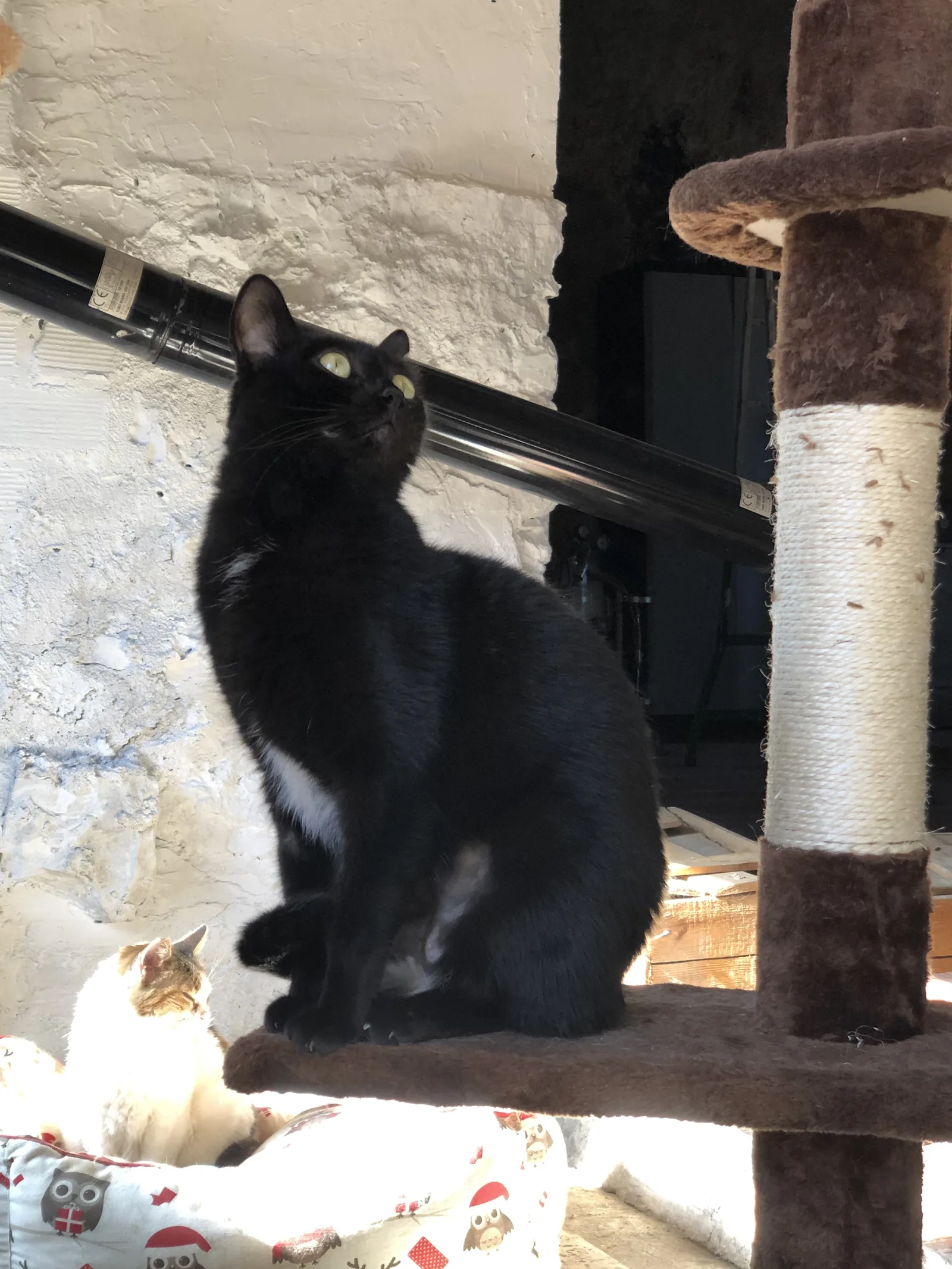
This is Noa. He was born in our house, to his mum, Bati. He was gentle, a little fragile… and he never went outside.
Noa had FIP: feline infectious peritonitis. It starts with a very common coronavirus, one most cats carry without any harm. But in a few cats, the virus changes, and the body turns against itself.
For decades, FIP meant one thing: goodbye. When Noa got sick, there was no cure.
Then, in 2019, researchers at the University of California, Davis, published a trial of an antiviral called GS-441524. Most of the cats recovered.
Today, studies report recovery in more than eight out of ten treated cats.
At first, treatment meant an injection every day, for twelve weeks. Eighty-four of them. And they sting. Cats had very strong opinions about that. Today, in many countries, it's a tablet.
But where you live still decides whether your vet can give it. In the United Kingdom, Australia, the Netherlands, the United States and Canada, vets can prescribe it legally.
In Spain, they still can't. So owners here face an impossible choice, and some turn to products that nobody controls.
European vets have asked lawmakers for a legal option. We hope they're heard soon.
If your young cat has a fever that won't go away, a swollen belly, or keeps losing weight, see your vet early. Time matters.
Noa didn't get his chance. We'd like every cat after him to get theirs.
For decades, a diagnosis of FIP (feline infectious peritonitis) meant saying goodbye. We know that feeling well: in our rescue we lost Noa, a gentle cat born in our house, to the dry form of FIP. When we wrote about him, there was no cure.
That has changed. Antiviral treatment now saves most cats with FIP. But where you live decides whether your vet can legally give it to your cat. This guide explains both.
What is FIP?
FIP is caused by feline coronavirus (FCoV), a very common virus that usually lives harmlessly in cats' intestines and spreads through faeces, especially where many cats share litter trays. In a small proportion of infected cats, the virus changes inside the body and triggers an overwhelming immune reaction. That's FIP.
It is most common in young cats (under about two years) and in multi-cat environments such as shelters, catteries and rescues, but any cat can be affected. It is not caused by anything the owner did wrong: our Noa never went outside.
FIP can take different forms:
- Wet (effusive) FIP: fluid builds up in the belly or chest.
- Dry (non-effusive) FIP: inflammation forms in organs, without much fluid. It's often harder to recognise.
- Eye or neurological FIP: the virus affects the eyes or the brain and spinal cord.
Signs to watch for
- a fever that doesn't go away, even with antibiotics
- tiredness, poor appetite and weight loss, or a kitten that stops growing
- a swollen, fluid-filled belly
- difficulty breathing (fluid in the chest)
- yellow gums or skin (jaundice)
- eye changes: cloudiness, colour change, different-sized pupils
- wobbliness, behaviour changes or seizures
These signs have many possible causes. If your cat shows any of them, especially a young cat, see your vet.
How FIP is diagnosed
There's no single perfect test. Vets combine clues: the cat's age and history, blood tests (typically high globulins and a low albumin-to-globulin ratio), ultrasound, and, when there's fluid, analysis of that fluid including PCR testing for the virus. Because treatment works best when started early, a vet with experience in FIP is a big help.
From death sentence to treatable
The turning point came from research at the University of California, Davis. In a field trial published in 2019, cats with naturally occurring FIP were treated with GS-441524, a nucleoside analogue that stops the virus from copying itself. Most of the treated cats recovered and stayed well.
Since then, more studies and treatment programmes in countries where the drug is legal have reported recovery in more than 8 out of 10 cats. A systematic review of studies from 2018 to 2024 called GS-441524 a highly promising treatment with a high success rate.
Other antivirals are used too:
- Remdesivir, a closely related drug that the body turns into GS-441524, often given by injection at the start of treatment, sometimes in hospital.
- Molnupiravir, an oral antiviral. A 2024 study of 118 cats found it about as effective as GS-441524: almost every cat that completed treatment went into remission with either drug.
Treatment usually lasts about 12 weeks, with regular blood tests. Some cats relapse and need a second course. Your vet decides the drug, dose and duration: doses depend on the form of FIP and on the cat's weight, which changes during treatment.
From a daily painful injection to tablets
When GS-441524 first became known, most cats received it as a daily injection under the skin for around 12 weeks. The injections sting, and many owners describe giving 84 painful shots to a cat who has to be held down as one of the hardest parts of the whole experience.
Today, oral tablets and capsules are available and widely used where treatment is legal. For most cats, a daily tablet is far kinder than a daily injection. Injections are still sometimes used at the start, for very sick cats or cats who can't take tablets.
Where treatment is legal: country by country
At the time of writing (September 2026), the situation looks like this. Rules change, so always check the current situation with your vet.
| Country | Can vets legally provide FIP antivirals? |
|---|---|
| United Kingdom | Yes: GS-441524 (injections and tablets) and remdesivir, through veterinary compounding pharmacies |
| Australia | Yes: compounded GS-441524 and remdesivir through vets |
| Netherlands | Yes: legal treatment is available through vets |
| United States | Yes, since June 2024: compounded GS-441524 by veterinary prescription (the FDA allows it under its compounding guidance, though it is not an FDA-approved drug) |
| Canada | Yes: compounded GS-441524 through veterinary channels |
| Some other European countries (for example Cyprus, Czechia, Finland, Ireland, Sweden) | Vets can order compounded GS-441524 from the UK |
| Spain | No: there is currently no legal FIP antiviral that vets can prescribe |
European veterinary organisations (the Federation of Veterinarians of Europe and FECAVA) have called on legislators to give vets a legal way to use GS-441524 or remdesivir, precisely so that owners don't have to turn to unregulated sources.
What this means if you live in Spain
In Spain, a FIP diagnosis today still leaves owners in a very difficult position. There are effective treatments, but no legal way for a vet to prescribe them.
Many unlicensed GS-441524 products are sold online and through social media groups. We understand why desperate owners look for them, and many cats have been treated this way. But be aware that:
- these products are not licensed, so their quality and strength are not officially controlled;
- dosing, monitoring and relapses need medical supervision, and treatment without a vet carries real risks;
- the legal situation is uncertain for everyone involved.
What we'd suggest:
- Talk openly with your vet. Ask whether they have experience with FIP, and about options for diagnosis, monitoring and supportive care. Ask about any legal routes that may exist by the time you read this.
- Look for a vet experienced in feline medicine. A second opinion or referral can help, especially to confirm the diagnosis.
- Never guess doses from the internet, and never give human medicines without a vet.
We hope that Spain, and the rest of the EU, will follow the UK, the Netherlands and others soon. No owner should have to choose between the law and their cat's life.
Can FIP be prevented?
There's no reliable vaccine recommended for routine use. What helps is reducing coronavirus spread and stress, especially where there are kittens:
- enough litter trays (one per cat, plus one), scooped daily and cleaned often
- litter trays kept away from food bowls
- avoiding overcrowding, and keeping groups small and stable
- keeping stress low, especially for kittens and newly arrived cats
In memory of Noa
Noa was born in our house to his mum Bati. He was always a little more fragile than his sisters, and he never went outside. The dry form of FIP took him far too soon, at a time when there was no treatment. Today, in many countries, he would probably have had a chance. That's why we wrote this guide, and why we hope the law in Spain changes soon.
Questions people ask
Is FIP still a death sentence?
Not any more. Antivirals such as GS-441524 and molnupiravir lead to recovery in most treated cats in studies and treatment programmes. The problem is access: they are not legally available through vets in every country.
Is FIP treatment legal in Spain?
At the time of writing (September 2026), there is no legal FIP antiviral that vets in Spain can prescribe. It is legally available through vets in countries such as the UK, Australia, the Netherlands, the US and Canada. Always check the current situation with your vet.
Is FIP treatment injections or tablets?
Early treatment was a daily injection under the skin for about 12 weeks. Today oral tablets and capsules are widely used where treatment is legal; injections are still used in some cases, for example at the start of treatment.
Is FIP contagious to other cats?
The underlying feline coronavirus spreads easily through faeces, but FIP itself develops inside an individual cat when the virus changes. Good litter hygiene and low stress help reduce the risk in multi-cat homes.
Should I buy FIP medicine online?
Unlicensed products are widely sold but their quality is not officially controlled, and treatment needs dosing and monitoring by a vet. Talk to your vet first and never guess doses.
Sources
- Efficacy of GS-441524 for Feline Infectious Peritonitis: a systematic review (2018–2024) — PMC
- GS-441524 and molnupiravir are similarly effective for FIP — Frontiers in Veterinary Science (2024)
- FIP treatment options in Europe — Federation of Veterinarians of Europe (brochure)
- Veterinarios europeos piden opciones legales para tratar la PIF — Animal's Health
- FDA allows compounded FIP drug in certain cases — AVMA
- Compounded, veterinarian-prescribed FIP treatment now available in the US and Canada — AAHA
- Access to treatment by country — FIP Treatment Guide
Stories like this one cost food, vets and time.
A monthly Patreon sponsorship keeps the next rescue possible — and you get the behind-the-scenes updates.
Keep reading
Health basics
What is IBD in cats? Signs, diagnosis and treatment
Cats don't "just vomit". Regular vomiting, diarrhoea or weight loss can be signs of inflammatory bowel disease (IBD). Here's what IBD is, the signs to watch for, how vets diagnose it, and how it's treated.
29 Sept 2026
Health basics
Cat thyroid problems: yowling at night, eating more, losing weight
An older cat who suddenly yowls at night, eats like never before and still loses weight may have an overactive thyroid. Hyperthyroidism is the most common hormone disease in older cats, and it's very treatable. Here are the signs, how it's diagnosed, and the four treatment options.
30 Sept 2026
Health basics
Asking AI about your cat's health: how to do it well (and when to call the vet)
More and more people ask AI chatbots about their cat's symptoms. Used well, AI can help you understand, prepare and ask better questions. Used badly, it can delay care. Here's how to describe symptoms clearly, the red flags that mean "vet now", and what AI should never decide.
30 Sept 2026