Why you shouldn't skip brushing your cat
By Dalia · Last reviewed 29 Sept 2026
Read the story
His Majesty spends hours every day grooming himself. So why on earth should you brush him?
Because every lick swallows loose hair. And what goes in… comes back up. Usually on your favourite rug. At three in the morning.
Brushing removes that hair before it's swallowed. Fewer hairballs.
It also prevents mats: tight knots that pull on the skin and can really hurt. Long-haired cats are the most at risk.
Some cats need your help even more. Older cats, overweight cats and cats with stiff joints often can't reach everywhere.
And brushing is a free health check. You'll spot lumps, fleas, scabs or sore spots early.
How often? Long-haired cats: every day. Short-haired cats: about once a week.
Keep it short and sweet. Brush in the direction of the fur, start where your cat loves being stroked, and stop before they've had enough. Treats help. A lot.
Found a mat? Never cut it out with scissors. A cat's skin is thin and easy to cut. Ask your vet or a professional groomer.
And if your cat still brings up hairballs often, or coughs without bringing anything up, see your vet.
His Majesty is now glossy, fluffy and hairball-free. The rug is safe. For now.
His Majesty spends hours a day grooming himself, and he would like you to know that he is perfect. So why should you pick up a brush? Because a little help from you prevents hairballs, painful mats and hidden health problems. Watch the short film above, then read the details.
Five good reasons to brush your cat
1. Fewer hairballs
Every time your cat grooms, their rough tongue collects loose hair, and most of it gets swallowed. Some passes through, some comes back up as a hairball (usually on your favourite rug, usually at 3 a.m.). Brushing removes that loose hair before it's swallowed. It makes the biggest difference during moulting season.
2. No painful mats
Mats are tight knots of dead and living hair. They pull on the skin every time your cat moves, they can hurt a lot, and skin problems can develop underneath. They form most easily in long-haired cats, especially behind the ears, in the armpits, on the belly and on the back of the legs.
3. Some cats can't do it alone
Older cats, overweight cats and cats with stiff or painful joints often can't reach their back, hips or tail. Those are the cats who need your help most. A cat whose coat suddenly looks greasy, scruffy or matted may be in pain or unwell, so mention it to your vet.
4. A free health check
Regular brushing is the easiest way to notice changes early: lumps and bumps, fleas or flea dirt, scabs, sore spots, dandruff, or areas your cat doesn't want touched.
5. Less hair everywhere, and a closer bond
Brushing means less fur on your sofa and clothes, and for some people with mild cat allergies it may reduce what floats around the house. Many cats also come to enjoy it as calm, one-to-one time.
How often should you brush?
- Long-haired cats: every day, or at least every other day.
- Short-haired cats: about once a week, more during moulting.
- Older, overweight or arthritic cats: more often, gently, focusing on the areas they can't reach.
Tools
- Short coats: a soft brush or a rubber grooming mitt.
- Long coats: a wide-toothed comb for tangles, then a slicker or soft brush.
Whatever you use, it should feel pleasant. Try it on your own arm first: if it scratches you, it will scratch your cat.
How to brush without a fight
- Pick a calm moment, for example after a meal or a play session, when your cat is relaxed.
- Start where your cat loves being touched: cheeks, chin and back. Leave the belly and legs for later (or never, for some cats).
- Brush in the direction of the fur, with gentle strokes.
- Keep it short. Two or three minutes is plenty at first. Build up slowly.
- Stop before your cat has had enough. Tail flicking, skin twitching, ears turning back, growling or trying to leave all mean "that's enough for today".
- Reward. Treats, praise, play. Treats help. A lot.
Found a mat? Never use scissors
Never cut a mat out with scissors. A cat's skin is very thin, and mats sit tight against it, so it's extremely easy to cut the skin without seeing it.
- A small tangle can sometimes be teased apart gently with your fingers or a wide-toothed comb, holding the hair at the base so you don't pull on the skin.
- For bigger or tight mats, ask your vet or a professional cat groomer. They use clippers, not scissors. Some long-haired cats with frequent mats do better with a trim, such as a "lion cut".
When to see your vet
- Your cat brings up hairballs often, despite regular brushing.
- Your cat coughs or gags but nothing comes up. That can be a sign of asthma, not hairballs (see our guide to asthma in cats).
- The coat suddenly changes: greasy, dull, patchy, very scruffy, or full of mats.
- You find lumps, sores, fleas or itchy skin.
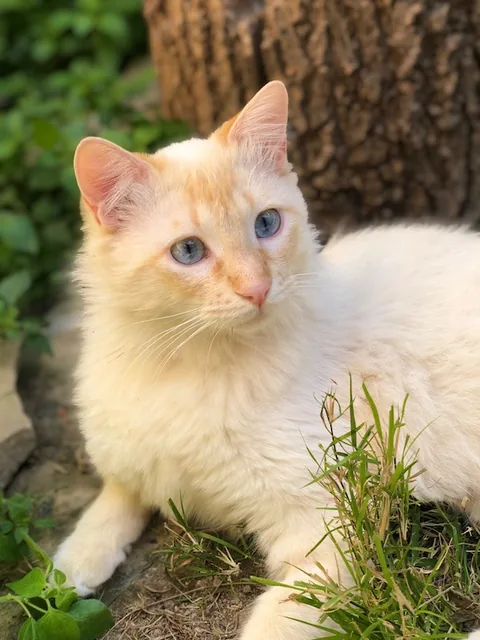
Fluffy cats like our Ivan (now happily adopted) are living proof that a few minutes with a brush keeps both the cat and the rug happy.
Questions people ask
How often should I brush my cat?
Long-haired cats need brushing every day (or at least every other day). Short-haired cats usually need it about once a week, a little more during moulting. Older, overweight or arthritic cats need more help.
Does brushing really reduce hairballs?
Yes. Brushing removes loose hair before your cat swallows it while grooming. If hairballs stay frequent despite regular brushing, talk to your vet.
Can I cut a mat out with scissors?
No. Cat skin is thin and mats sit right against it, so it is very easy to cut the skin. Tease small tangles out gently or ask a vet or professional groomer to remove mats with clippers.
My cat hates being brushed. What can I do?
Keep sessions very short, start where your cat likes being stroked, use a soft brush or rubber mitt, and reward with treats. Stop at the first signs of annoyance and try again another day.
Why has my cat stopped grooming?
A greasy, scruffy or matted coat can be a sign of pain (for example arthritis), weight gain, dental problems or illness. Book a vet check.
Sources
Stories like this one cost food, vets and time.
A monthly Patreon sponsorship keeps the next rescue possible — and you get the behind-the-scenes updates.
Keep reading
Health basics
Signs your cat has asthma (and why it isn't a hairball)
That "hairball" your cat keeps trying to bring up might not be a hairball at all. Here is how to recognise asthma in cats, the emergency signs you must never ignore, common triggers at home, and how treatment works.
29 Sept 2026
Health basics
What is IBD in cats? Signs, diagnosis and treatment
Cats don't "just vomit". Regular vomiting, diarrhoea or weight loss can be signs of inflammatory bowel disease (IBD). Here's what IBD is, the signs to watch for, how vets diagnose it, and how it's treated.
29 Sept 2026
Everyday care
Why declawing is never the answer (and what to do instead)
Declawing isn't a nail trim: it's the amputation of the last bone of every toe. It can cause lifelong pain, it's banned in Spain, and it's never necessary. Here's what it really involves, and how to protect your sofa the kind way.
29 Sept 2026