Living with a hyperthyroid cat: life expectancy, T4 values, ear gel and poor appetite
By Dalia · Last reviewed 22 Nov 2026
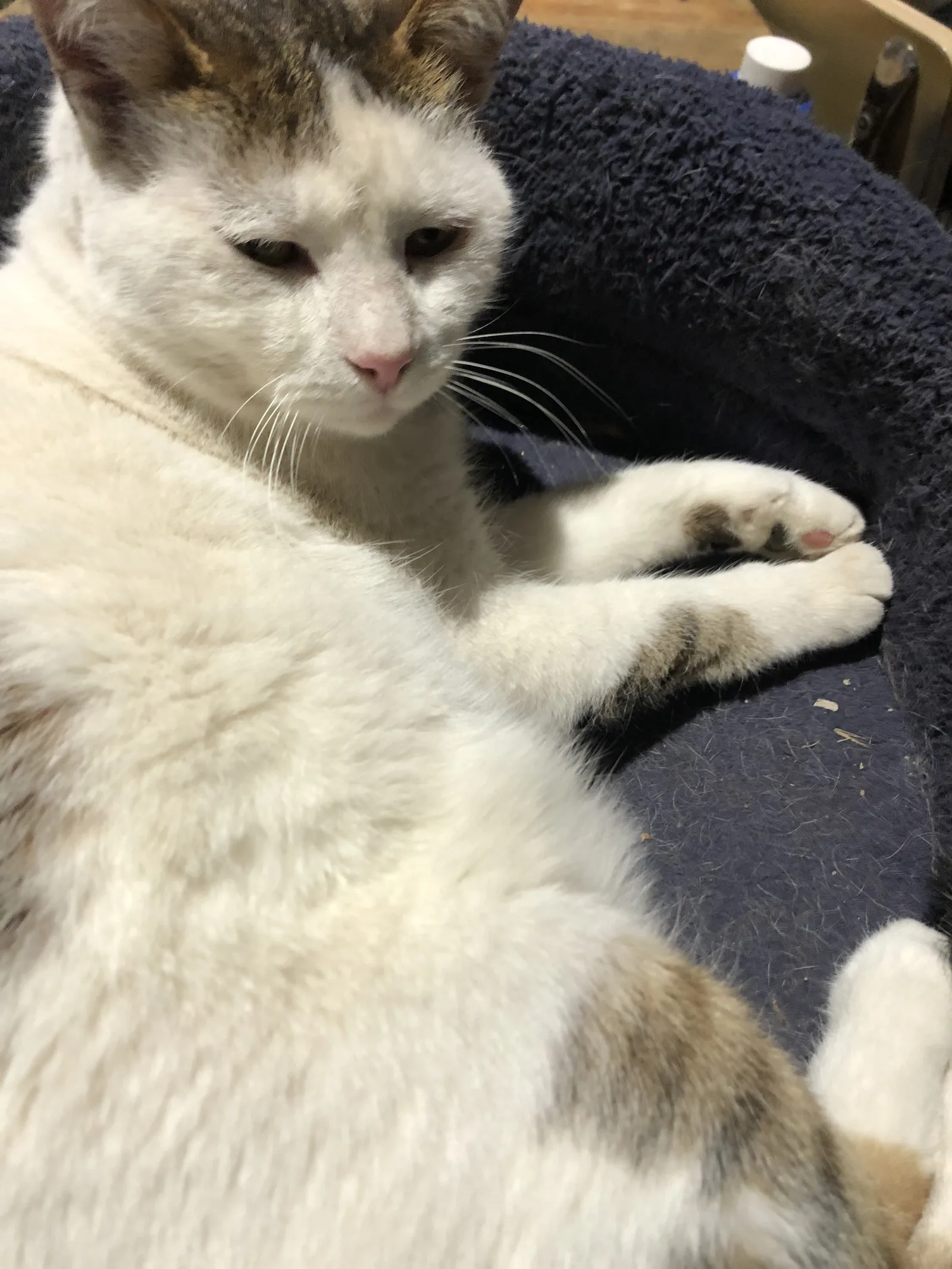
Your cat has been diagnosed with an overactive thyroid and treatment has started. Now come the practical questions: how long will my cat live, what do the blood values mean, why is the number not coming down, how do I use the ear gel, and why is my cat suddenly eating so little? For the signs and the four treatment options, start with cat thyroid problems.
How long do cats live with hyperthyroidism?
With treatment, usually years. Studies that followed treated cats report typical survival of about 2 to 4 years after radioactive iodine, and many cats live longer. Keep in mind that most cats are already seniors when the disease is found.
What changes the outlook:
- Kidney disease at the same time. It is the factor that matters most.
- No treatment. Untreated cats decline steadily: thinner, weaker, with strain on the heart and on blood pressure.
- A thyroid pushed too low. Over-treatment is hard on the kidneys, which is why doses are adjusted on blood tests.
Thyroid values in an old cat: how to read them
T4 is the thyroid hormone measured in the blood. Three things help when you look at the report:
- There is no universal normal number. Each laboratory prints its own range next to the result, and results come in two different units. Compare your cat's number with the range on the same report, never with a number from the internet.
- A normal result does not always rule the disease out. In an older cat, another illness can pull the value down. A result in the upper half of the normal range in a cat with clear signs is still suspicious, and vets usually repeat the test after a few weeks, together with a second thyroid test.
- On treatment, lower-normal is the aim. Most vets want the value in the lower half of the normal range, not at the very bottom and not below it.
Why is my cat's thyroid value not coming down?
The medicine blocks new hormone, but the hormone already in the body has to be used up first, so blood tests only show the effect after 2 to 4 weeks. If the value is still high after that, the usual reasons are:
- The dose is too low for this cat. Vets start low and step up on purpose.
- Doses are being missed, or a tablet is spat out behind the sofa.
- The gel is not being absorbed well: too little rubbed in, a dirty ear, or always the same ear.
- The diet is not strict. An iodine-restricted diet only works if the cat eats nothing else at all.
- The gland has grown. The thyroid tissue keeps growing over the years, so a dose that worked can become too small.
Do not raise the dose yourself. Tell your vet exactly how the medicine is being given: that is often where the answer is.
How to apply thyroid gel to a cat's ear
The gel is absorbed through the bare skin on the inside of the ear flap. It is a good option for cats who will not take tablets.
- Put on a disposable glove or a finger cover. The medicine goes through human skin too.
- Wipe the inside of the ear flap with damp cotton wool to remove old gel, and let it dry.
- Put the prescribed amount on your gloved fingertip.
- Rub it gently into the hairless skin on the inside of the ear flap, not down into the ear canal.
- Use the other ear next time, and keep alternating.
- Throw the glove away and wash your hands.
Keep other pets and children from licking or touching the ear for a while afterwards. The gel can take a little longer than tablets to bring the value down, and it tends to upset the stomach less. Some cats get a red, sore ear: tell your vet if that happens.
My cat has a thyroid problem and is eating very little
Hyperthyroid cats are usually ravenous, so a poor appetite always deserves a call to the vet. The common reasons:
- A side effect of the medicine. Loss of appetite, vomiting and tiredness are the usual ones, and they mostly appear in the first 3 months.
- The thyroid has been pushed too low. The cat becomes quiet and sleepy and may go off food.
- Kidney disease has come to the surface. An overactive thyroid can hide it; treatment reveals it.
- Another illness, such as dental pain, gut disease or pancreatitis.
- The disease itself. A small number of hyperthyroid cats are dull and eat poorly instead of being hungry and restless.
Call your vet before giving the next dose. A cat that eats nothing for a full day needs to be seen.
Diarrhoea, anaemia and an itchy face
- Diarrhoea. Extra thyroid hormone speeds up the gut, so soft stools and vomiting are part of the disease and usually settle once it is under control. If they start after the medicine was begun, they can be a side effect.
- Anaemia. The medicine can, rarely, lower the blood cell counts, which is one reason for the blood tests in the first months. In old cats, kidney disease is the more common cause.
- Scratching the face and neck until the skin is raw. This is a sign that the cat does not tolerate the medicine. Call your vet the same day, before the next dose.
- Yellow gums or eyes, bruising, fever or sudden weakness. Rare, but urgent.
Check-ups: what to expect
- A blood test 2 to 4 weeks after starting, and after every change of dose.
- Thyroid value, kidney values and a blood count each time, and blood pressure regularly.
- Once the cat is stable, a check every 3 to 6 months.
- Weigh your cat at home every week or two: weight coming back is the best sign that treatment is working.
Most treated cats put the weight back on, calm down and get on with being cats.
Questions people ask
How long can a cat live with hyperthyroidism?
With treatment, usually years. Studies report typical survival of about 2 to 4 years after radioactive iodine, and many cats live longer. Kidney disease at the same time is what shortens the outlook most.
What is a normal thyroid value for an old cat?
There is no universal number: each laboratory prints its own range next to the result. A result in the upper half of the normal range in an old cat with signs is still suspicious. On treatment, most vets aim for the lower half of the normal range.
Why is my cat's thyroid value not going down on medication?
Blood tests only show the effect after 2 to 4 weeks. After that, the usual reasons are a dose that is too low, missed doses, gel that is poorly absorbed, a diet that is not strict, or a gland that has grown. Do not raise the dose yourself.
How do I put thyroid gel on my cat's ear?
Wear a glove, wipe the inside of the ear flap clean, and rub the prescribed amount into the hairless skin on the inside of the flap, not into the ear canal. Use the other ear next time and wash your hands.
Why is my hyperthyroid cat not eating?
Most often a side effect of the medicine in the first 3 months, a thyroid pushed too low, kidney disease that treatment has revealed, or another illness. Call your vet before the next dose.
Can thyroid disease cause diarrhoea or anaemia in cats?
Diarrhoea, yes: extra thyroid hormone speeds up the gut, and it usually settles with treatment. Anaemia is less typical: rarely the medicine lowers the blood cell counts, and in old cats kidney disease is the more common cause.
Sources
- 2016 AAFP guidelines for the management of feline hyperthyroidism — Journal of Feline Medicine and Surgery
- Hyperthyroidism in cats — International Cat Care
- Methimazole for hyperthyroid cats — Veterinary Partner (VIN)
- What is the lifespan of cats with hyperthyroidism? — dvm360
- Administering transdermal medication to your pet's ear — University of Illinois Veterinary Teaching Hospital
- Test options for evaluating thyroid function in cats — Michigan State University Veterinary Diagnostic Laboratory
Stories like this one cost food, vets and time.
A monthly Patreon sponsorship keeps the next rescue possible — and you get the behind-the-scenes updates.
Keep reading
Health basics
Cat thyroid problems: yowling at night, eating more, losing weight
An older cat who suddenly yowls at night, eats like never before and still loses weight may have an overactive thyroid. Hyperthyroidism is the most common hormone disease in older cats, and it's very treatable. Here are the signs, how it's diagnosed, and the four treatment options.
30 Sept 2026
Seniors and special needs
How old is my cat in human years? (Cat age chart)
A one-year-old cat is roughly a 15-year-old teenager, and a 10-year-old cat is in their mid-fifties. Here's the vet-accepted formula, a full cat age chart, the life stages, and what each stage means for your cat's care.
30 Sept 2026
Health basics
FIP treatment in practice: the 84 days, tablets or injections, the first days and neurological FIP
What FIP treatment looks like day to day: how long it lasts, tablets or injections, how to give the tablets around meals, what to expect in the first days, what is different in neurological FIP, and what happens after the last dose. No doses here: those are for your vet.
22 Nov 2026