Cat coughing: dry cough, hairball or asthma?
By Dalia · Last reviewed 22 Nov 2026
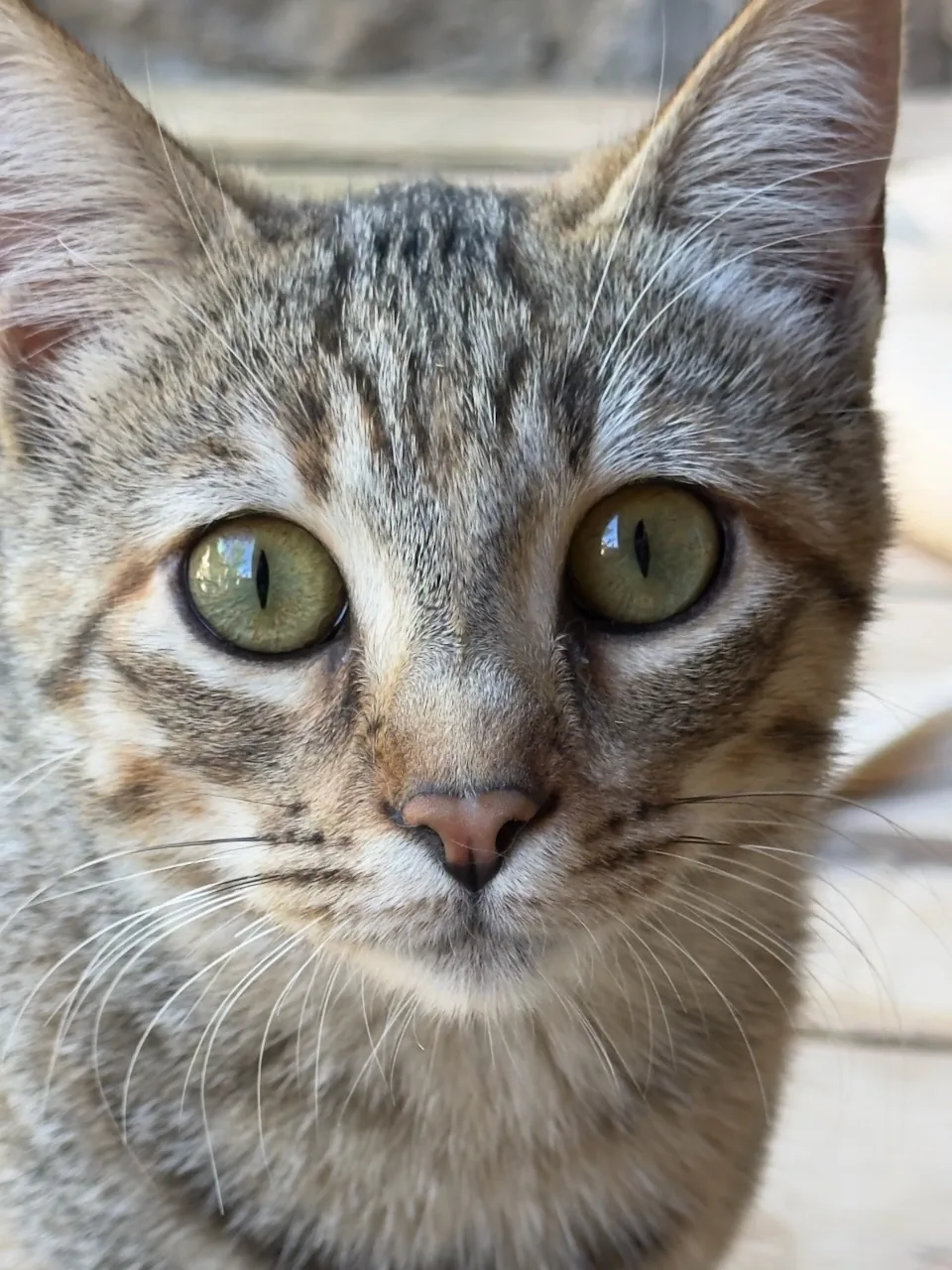
A cat crouches low, stretches the neck forward and makes a dry, hacking sound. Then nothing comes up. Most people think "hairball". Often it is a cough, and a cough that keeps coming back always has a cause worth finding. Here is how to tell the difference, what can be behind it, and when it is urgent.
Cough, hairball or sneeze? How to tell
| Cough | Hairball or vomiting | Sneeze | |
|---|---|---|---|
| Posture | Crouched low, neck stretched forward | Belly heaving up and down | Any position, head jerks |
| Sound | Dry hacking or wheezing, often several in a row | Wet retching and gulping | Short and sharp, through the nose |
| What comes out | Usually nothing, sometimes a little foam | Fur, food or liquid | A fine spray |
| Afterwards | Swallows, may breathe faster for a while | Walks off as if nothing happened | Carries on |
Film it. A cough rarely happens at the clinic. A short video on your phone is the most useful thing you can bring to the vet.
How long does it last?
- A hairball is usually over in under a minute, ends with fur on the floor, and your cat is back to normal straight away.
- A coughing fit lasts a few seconds to a couple of minutes. Nothing comes up, and it tends to return: the same day, the same week, the same time of night.
- An asthma attack does not settle. If your cat is still breathing hard minutes after the coughing has stopped, treat it as an emergency (see below).
Bringing up a hairball now and then is normal. "Trying to bring up a hairball" every week with nothing to show for it is not.
What causes a dry cough in cats?
- Asthma and chronic bronchitis. The most common cause of a cough that keeps returning. The small airways are inflamed and narrow, often set off by dust, smoke or pollen. See signs your cat has asthma.
- Airway infections. Cat flu viruses and bacteria can reach the lower airways, especially in kittens, unvaccinated cats and cats from shelters or the street. There is often sneezing, runny eyes or a fever too.
- Lungworm. Cats catch it by eating slugs and snails, or prey such as birds and mice that have eaten them. It is found all over Europe, mostly in cats that go outdoors and hunt. See parasites in cats.
- Heartworm. Spread by mosquitoes around the Mediterranean, including Spain, Italy, the south of France and Greece. Indoor cats can catch it too. In cats it mainly damages the lungs, so coughing and fast breathing are typical signs.
- Irritants. Cigarette and fireplace smoke, dusty or scented litter, sprays, candles and incense.
- Something stuck. A blade of grass in the throat or behind the nose causes sudden, violent coughing, gagging and swallowing.
- Less common causes. Fluid around the lungs, growths in the chest, and heart disease. Unlike in dogs, heart disease rarely makes a cat cough; it shows as fast or laboured breathing instead.
A cat that is short of breath: go now
Go to your vet or the nearest emergency clinic straight away if your cat:
- breathes with the mouth open or pants like a dog
- has a belly or chest that heaves with every breath
- has blue, grey or very pale gums or tongue
- sits hunched with the elbows out and the neck stretched, and will not lie down
- is weak, collapses, or coughs up blood
Keep your cat calm, put them in the carrier with as little handling as possible, and phone ahead. Do not try to give food, water or tablets.
Count the breathing rate at home
- Wait until your cat is asleep or resting quietly, not purring.
- Count how often the chest rises in 30 seconds and multiply by 2.
- Write it down, and repeat on a few different days.
A healthy cat takes fewer than 30 breaths a minute when asleep. Regularly over 30: tell your vet. Over 40, or any visible effort: call the same day.
When to see the vet for a cough
One cough now and then in a cat that eats, plays and breathes normally can be watched. Book an appointment if:
- the cough comes back several times a week, or is still there after 2 weeks
- there is wheezing, fast breathing, tiring quickly or weight loss
- your cat also has runny eyes or nose, a fever, or has stopped eating
- your cat is a kitten, a senior, or has FIV or FeLV
What the vet will do
Your vet will listen to the chest and ask what the cough looks like (your video helps). Usual next steps are chest X-rays and blood tests. For a cat that goes outdoors, a stool sample can be tested for lungworm larvae; it sometimes takes samples from several days to find them. In mosquito areas the vet may add heartworm tests. If the picture is still unclear, a sample can be taken from the airways under a short anaesthetic.
Treatment depends on the cause
- Asthma and bronchitis: anti-inflammatory medicine, often through an inhaler made for cats, and fewer triggers at home. Usually lifelong, and most cats do very well.
- Lungworm: a prescription antiparasitic, usually a spot-on or tablets, with a re-check afterwards.
- Infections: rest, fluids and food your cat will accept, plus antibiotics when bacteria are involved.
- Something stuck: removed under anaesthetic.
Never give a cat human cough or cold medicine. Paracetamol and many decongestants are poisonous to cats, even in small amounts.
What you can do at home
- Film the cough and keep a simple diary: date, time, what was going on.
- Switch to an unscented, low-dust litter, and keep smoke, sprays, candles and incense away from your cat.
- Keep parasite prevention up to date and ask your vet whether it covers lungworm and heartworm where you live.
- Brush long-haired and older cats often, so fewer real hairballs form. See why brushing matters.
The good news: once the cause is found, most coughing cats can be treated or kept comfortable for years.
Questions people ask
Why does my cat have a dry cough?
The most common cause of a dry cough that keeps returning is asthma or chronic bronchitis. Airway infections, lungworm, heartworm, smoke or dust, and something stuck in the throat are other causes. A cough that comes back needs a vet check.
How do I tell a cough from a hairball?
Both start the same way: crouched low, neck stretched out. A hairball ends with fur, food or liquid on the floor. A cough usually ends with nothing, and your cat swallows and carries on. Film it and show your vet.
How long does bringing up a hairball take, and how long does an asthma attack last?
A hairball is usually over in under a minute and your cat is fine straight away. A coughing fit lasts seconds to a couple of minutes and keeps returning. In an asthma attack the breathing stays hard after the coughing stops: that is an emergency.
My cat is short of breath. What should I do?
Open-mouth breathing, a heaving belly, blue or pale gums, or a cat that will not lie down are emergency signs. Keep your cat calm, put them in the carrier and go to a vet or emergency clinic straight away. Phone ahead.
Can an indoor cat get lungworm or heartworm?
Lungworm is mostly a risk for cats that go outdoors and hunt. Heartworm is spread by mosquitoes, so indoor cats in Mediterranean areas can catch it too. Ask your vet which prevention makes sense where you live.
Can I give my cat cough medicine?
No. Never give human cough or cold medicine. Paracetamol and many decongestants are poisonous to cats. The right treatment depends on the cause, so let your vet decide.
Sources
- Asthma and chronic bronchitis in cats — International Cat Care
- Coughing in cats — VCA Animal Hospitals
- Home breathing rate evaluation — VCA Animal Hospitals
- Feline aelurostrongylosis (cat lungworm): a review — Parasites & Vectors
- Dirofilarioses in cats: European guidelines from the ABCD — Journal of Feline Medicine and Surgery
Stories like this one cost food, vets and time.
A monthly Patreon sponsorship keeps the next rescue possible — and you get the behind-the-scenes updates.
Keep reading
Health basics
Signs your cat has asthma (and why it isn't a hairball)
That "hairball" your cat keeps trying to bring up might not be a hairball at all. Here is how to recognise asthma in cats, the emergency signs you must never ignore, common triggers at home, and how treatment works.
29 Sept 2026
Health basics
Parasites in cats: worms, protozoa and the hitchhikers (and what you can catch)
Worms, giardia, coccidia, fleas, ticks, sandflies: the parasites cats carry, why some need more than a dewormer, which ones can reach people, Leishmania in Catalonia, Tino's story, and how often to deworm.
11 Nov 2026
Health basics
IBD or lymphoma in cats: how it is diagnosed, and what vomiting blood means
No blood test can confirm IBD in a cat. Here is how vets work out whether it is IBD, intestinal lymphoma or something else: what each test shows, what a biopsy adds, what to note before the appointment, and what to do when a cat vomits blood.
22 Nov 2026